
Nostalgia as a Business: Why the 90s and 2000s Keep Coming Back

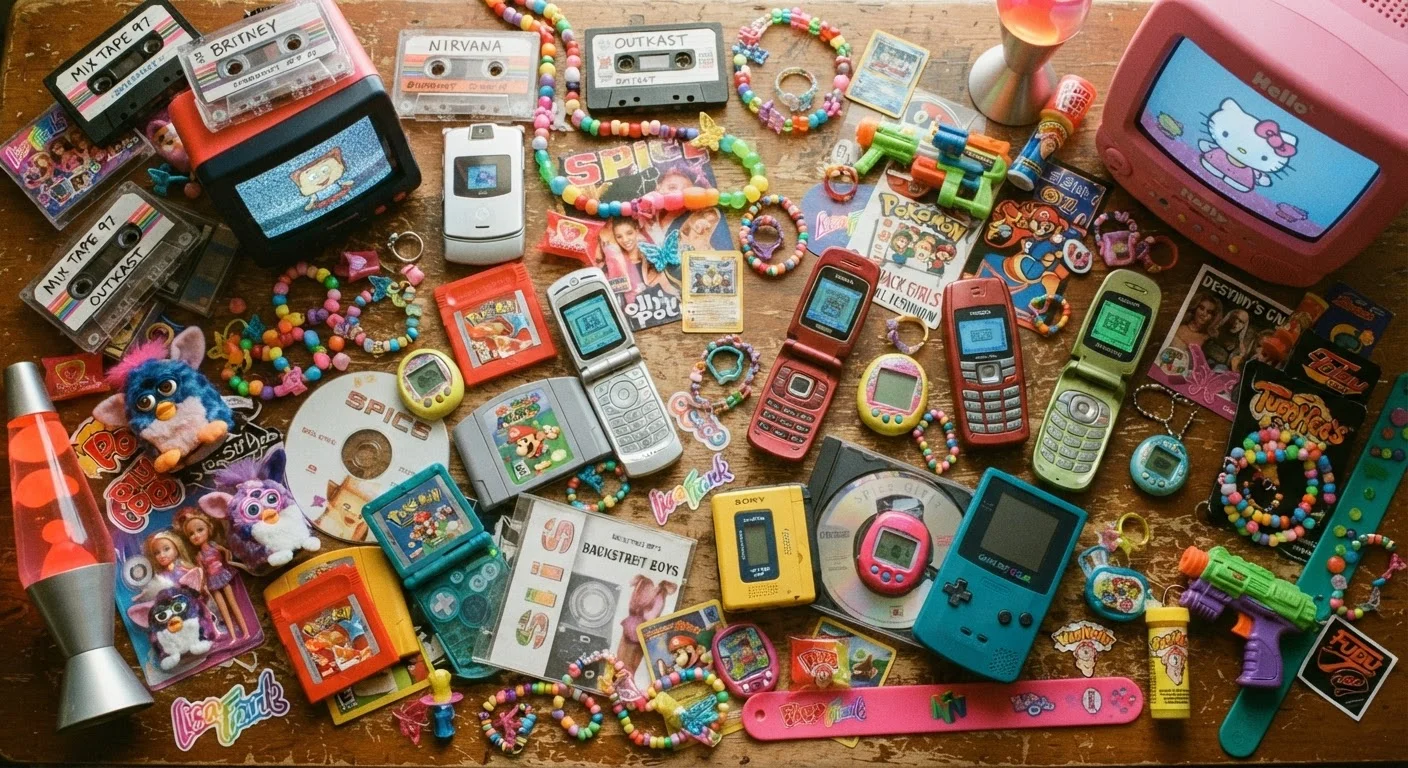
Reboots, throwback aesthetics, and revival tours aren't accidental. Here's why nostalgia has become one of entertainment's most reliable engines.
Key takeaways
- Nostalgia isn't accidental — it's a deliberate entertainment and marketing strategy with measurable returns.
- The 90s and 2000s are peak nostalgia targets because their original audiences are now prime-spending adults.
- Streaming platforms have turbocharged the nostalgia economy by making catalog content instantly accessible.
- Psychological research links nostalgic experiences to elevated mood and willingness to spend.
- The line between genuine revival and cynical cash-grab is increasingly visible — and audiences notice.
The 20-Year Rule and Why It's So Reliable
There's an informal but remarkably consistent pattern in entertainment: cultural eras tend to become nostalgia gold roughly 20 to 30 years after they peak. The math practically explains itself. The teenagers and young adults who absorbed a cultural moment most intensely are, two decades later, adults with real purchasing power and a growing appetite to reconnect with the feelings of their youth.
For the entertainment industry, this creates something close to a predictable revenue cycle. The 90s are currently the sweet spot — and the 2000s are pulling up fast behind them. Studio executives, music promoters, and streaming platforms aren't being sentimental when they greenlight a reboot or a reunion tour. They're reading demographic spreadsheets. The audience that grew up on Friends, TRL, and frosted tips is now in peak earning years, and companies know it.
This cycle isn't new — the 1970s went through the same nostalgia treatment in the 1990s — but digital culture and streaming have dramatically accelerated and amplified how the mechanism plays out. To understand what makes some moments culturally sticky and others forgettable, it's worth exploring why certain trends take hold in the first place.
The Psychology Behind the Payoff
Nostalgia isn't just a fuzzy feeling — it's a well-studied psychological phenomenon. Research published in psychology journals has found that nostalgic experiences tend to elevate mood, increase feelings of social connectedness, and can even reduce the psychological sting of uncertainty. In times of social or economic instability, people lean harder into familiar cultural touchstones.
Entertainment companies didn't need to read the academic literature to notice this pattern, but the research validates what the box office has been saying for years: audiences pay for comfort and recognition, not just novelty. A film franchise built on a beloved IP carries an enormous emotional head start over an original concept, regardless of story quality.
“Nostalgia is a file that removes the rough edges from the good old days.”
— Doug Larson, American columnist and author
This also explains why nostalgia content performs well during turbulent cultural moments. When the present feels unstable, a carefully produced trip back to a simpler (or at least a remembered) era has genuine emotional appeal. It's worth noting, though, that memory is selective and constructive — the 90s and 2000s that people remember are frequently tidied-up versions of what actually existed.
How Streaming Supercharged the Nostalgia Economy
Before streaming, accessing old content required real effort — hunting down DVDs, catching reruns, or relying on memory. Streaming platforms changed the economics of nostalgia entirely. Deep catalogs of older content suddenly became assets rather than storage costs, and platforms discovered that library titles from past decades could quietly rack up enormous viewing hours.
This dynamic had a reinforcing effect on new content production. When a streaming platform noticed that a beloved 90s show was generating strong engagement in its catalog, commissioning a reboot or a continuation became a lower-risk proposition. The fan base was already there, already re-engaged, and already primed.
~20 yrs
Typical lag before an era peaks as nostalgia content
Widely observed by cultural analysts and marketers as the approximate generational gap between an era's cultural peak and its nostalgia revival cycle.
Top 10
Catalog titles routinely rank in streaming viewership charts
Streaming platforms have repeatedly reported that older catalog titles — including shows from the 90s and 2000s — generate viewing hours that compete with newly commissioned originals.
Billions
Annual global revenue attributed to licensed retro IP
Entertainment industry analysts broadly estimate that legacy intellectual property — franchises, characters, and formats from past decades — accounts for a significant share of global media and merchandise revenue each year.
The phenomenon also intersects with broader cultural shifts. The same audiences now rediscovering old TV shows and film franchises are often the same people fueling interest in analog hobbies and tangible experiences — a pattern explored in depth in our look at the quiet revival of analog pastimes.
What Separates a Good Revival From a Cynical Cash-Grab
Not all nostalgia plays are created equal, and audiences have become increasingly sophisticated at telling the difference. A revival that genuinely adds something — a new creative angle, evolved characters, or a perspective that reflects how both the story and its audience have changed — tends to be received as a worthy continuation. A revival that simply restages the original without purpose tends to generate short-term curiosity and long-term disappointment.
The most successful revivals treat the source material as a foundation rather than a script. They acknowledge that the original audience has grown up, and they bring those grown-up perspectives into the storytelling. The less successful ones mistake familiarity for quality and assume that recognition alone will carry the creative weight.
How to Spot a Thoughtful Revival
When evaluating whether a reboot or reunion is worth your time and money, look for signs that the creators engaged seriously with what made the original compelling — rather than simply reproducing its surface elements. Strong revivals often reference the original's emotional core while updating the storytelling for a changed audience. If the promotional materials lean entirely on nostalgia without hinting at anything new, that's usually a signal worth heeding.
For a broader view of how specific cultural moments from each decade have shaped American entertainment, a decade-by-decade reference provides useful context for understanding which eras left the deepest marks — and why some are more ripe for revival than others.
The Next Wave: What Comes After the 2000s Nostalgia Boom
Early signals of 2010s nostalgia are already surfacing in youth culture — a kind of meta-nostalgia for the early social media era, for specific aesthetic movements, for music genres and celebrity moments that defined that decade. The cycle is already turning.
What makes the current moment interesting is that the nostalgia economy has become self-aware. Audiences, journalists, and even the creators themselves frequently acknowledge — sometimes wryly — that a project is trading on nostalgia. That transparency hasn't diminished the appetite; if anything, it has become part of the cultural conversation around revivals. Whether this self-awareness will eventually produce a more discerning audience, or simply normalize the constant recycling of cultural eras, remains genuinely open.
What's clear is that nostalgia, as a commercial and emotional mechanism, isn't going anywhere. The entertainment industry has learned how to systematically activate it, and audiences have demonstrated that they'll show up for it — provided the execution earns the emotional investment being asked of them.
Frequently Asked Questions
All published content on this website is for informational and educational purposes only and should not be taken as professional advice. We recommend that readers seek expert opinion before making any decisions. The website is not responsible for any actions taken based on the information provided on this website. We are not liable for any inaccuracies, modifications, or omissions in information. Moreover, external links or third-party content are provided for convenience; we are not liable for their correctness. Users are advised to verify every piece of information before they use it for any purpose.