
Credit Scores Decoded: What the Numbers Actually Mean

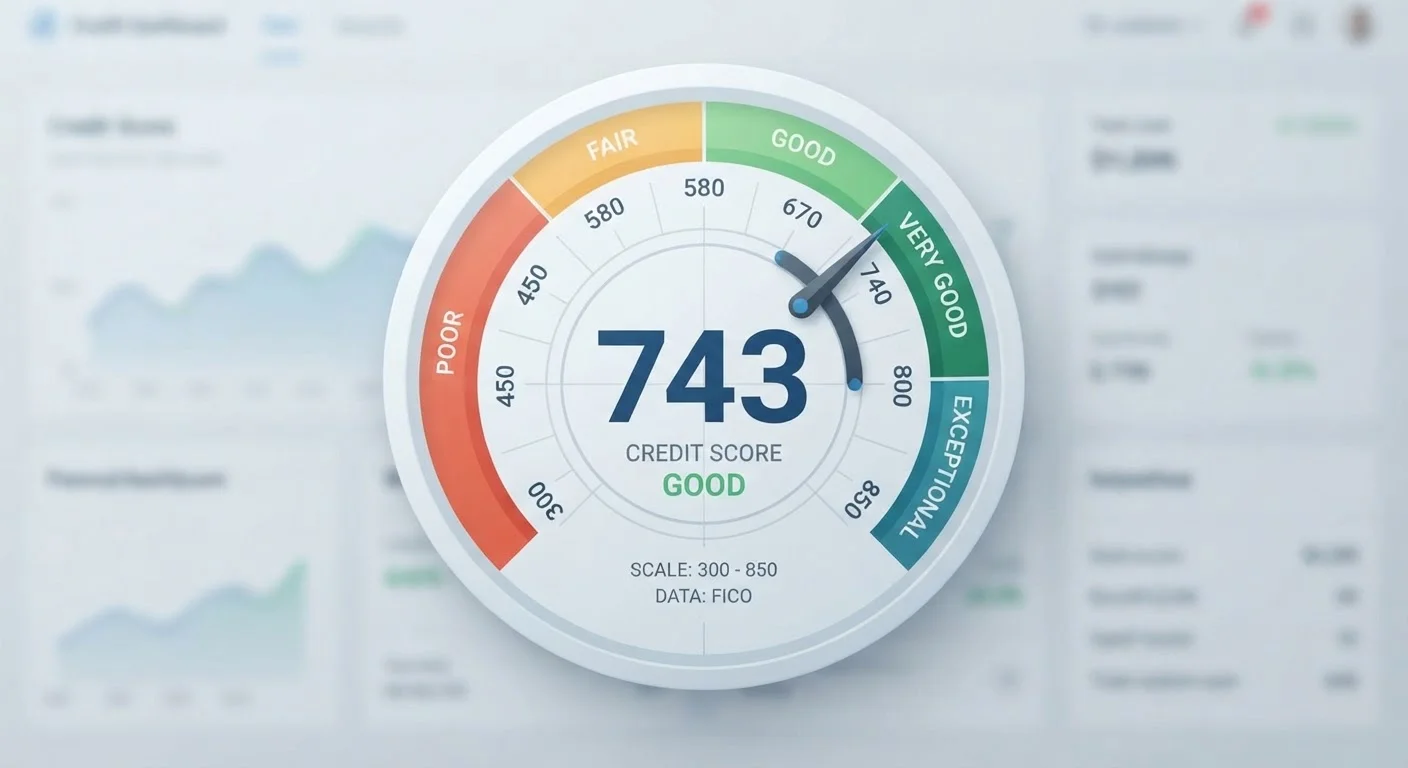
Understand exactly how credit scores are calculated, what each range signals, and why lenders pay close attention to them.
Key takeaways
- Credit scores range from 300 to 850; most lenders consider 670 or above a good starting point.
- Payment history is the single biggest factor, carrying roughly 35% of your FICO score.
- Multiple scoring models exist — your score may differ slightly depending on which model a lender uses.
- A higher score can mean access to lower interest rates, which saves real money over a loan's lifetime.
- You can check your credit report for free and monitor scores through many banks and financial apps.
The Scale Explained: What 300 to 850 Actually Represents
Credit scores don't emerge from thin air — they're calculated using a mathematical model applied to the information inside your credit report. The FICO model, the most common in US lending decisions, organizes scores into five broad ranges:
- Exceptional (800–850): Borrowers in this range represent the lowest risk to lenders and typically receive the most favorable interest rates and terms.
- Very Good (740–799): Still well above average; most lenders will offer competitive rates.
- Good (670–739): Near or above the median for US consumers; generally qualifies for standard loan products.
- Fair (580–669): Lenders may approve applications but often at higher interest rates to offset perceived risk.
- Poor (300–579): Approval becomes difficult; secured products or credit-building tools are typically the starting point here.
These ranges are guidelines, not hard rules. Individual lenders set their own internal cutoffs, so two borrowers with the same score can have different experiences depending on who they apply to and for what product. For a deeper look at how all five scoring factors are weighted, see the complete breakdown of credit score factors.
716
Average US FICO score
According to Experian's State of Credit report, the average FICO score among US consumers has hovered around 716 in recent years, placing the typical American in the 'good' range.
35%
Weight of payment history in FICO score
FICO's published scoring criteria identify payment history as the single largest component, accounting for approximately 35% of the total score calculation.
~21%
Americans with scores below 600
Research published by the Urban Institute estimates that roughly one in five American adults carries a credit score below 600, limiting access to mainstream credit products.
How the Number Is Built: The Five Core Factors
Your score is not a judgment — it's a calculation based on five measurable elements. Understanding each one helps you see which levers you can actually pull.
- Payment History (~35%): Whether you pay bills on time is the most influential factor. A single missed payment can create a meaningful drop, particularly on an otherwise clean record.
- Amounts Owed (~30%): This largely reflects your credit utilization ratio — how much of your available revolving credit you're currently using. Carrying high balances relative to your limits signals financial stress to models, even if you pay in full each month by the statement date.
- Length of Credit History (~15%): Older accounts and a longer average age of accounts tend to help. This is one reason closing old cards can sometimes backfire.
- Credit Mix (~10%): Having a variety of account types — installment loans, revolving credit — can modestly benefit your score, though you shouldn't take on debt purely for this reason.
- New Credit (~10%): Applying for several new accounts in a short period results in multiple hard inquiries, which can temporarily lower your score. Rate-shopping for mortgages or auto loans within a short window is typically treated as a single inquiry.
Knowing which everyday habits quietly affect these factors — sometimes in ways that feel unrelated to credit — is just as important. Surprising everyday behaviors can chip away at your score without you realizing it.
Why Lenders Care — and What It Costs You in Practice
A credit score is ultimately a risk-pricing tool. Lenders use it to decide not just whether to lend, but at what cost. The practical impact of a higher score is straightforward: it typically means a lower interest rate, which translates into real dollar savings over the life of a loan.
Consider a 30-year fixed mortgage. The difference between a 'fair' score and an 'exceptional' one can result in an interest rate that's a full percentage point or more lower. On a large loan balance, that gap compounds into tens of thousands of dollars over time — even though the only thing that changed was a three-digit number.
Credit scores also affect:
- Credit card APRs: Issuers often tier their rates based on creditworthiness. For more on how APR connects to your borrowing costs, see why APR is the number that really matters.
- Rental applications: Many landlords run credit checks as part of tenant screening.
- Insurance premiums: Some insurers in certain states use credit-based insurance scores to help set rates.
- Security deposits: Utility companies may require deposits from applicants with lower scores.
The score is one piece of a broader financial picture. Understanding your net worth alongside your credit profile gives you a more complete view of your financial health.
Reading the Data Behind the Score
Your credit score is only as accurate as the data feeding it. The three major US credit bureaus — Equifax, Experian, and TransUnion — each maintain their own version of your credit report, and errors are more common than most people assume. A misreported late payment, an account that doesn't belong to you, or an outdated balance can all suppress your score without your knowledge.
Under federal law, you're entitled to request a free copy of your credit report from each bureau periodically through AnnualCreditReport.com. Reviewing these reports regularly is one of the most practical steps you can take to protect your score. Reading your credit report without getting lost walks through each section so you know exactly what to look for — and how to dispute anything that looks wrong.
Understanding the type of debt on your report also matters. How secured and unsecured debt differ affects not just your score but also what a lender can do if payments stop — a distinction worth understanding before taking on new obligations.
This article provides general financial education and is not personalized financial or credit advice. For guidance specific to your situation, consider speaking with a qualified financial adviser or credit counselor.
Frequently Asked Questions
All published content on this website is for informational and educational purposes only and should not be taken as professional advice. We recommend that readers seek expert opinion before making any decisions. The website is not responsible for any actions taken based on the information provided on this website. We are not liable for any inaccuracies, modifications, or omissions in information. Moreover, external links or third-party content are provided for convenience; we are not liable for their correctness. Users are advised to verify every piece of information before they use it for any purpose.