
Things People Get Wrong About Closing Old Credit Cards

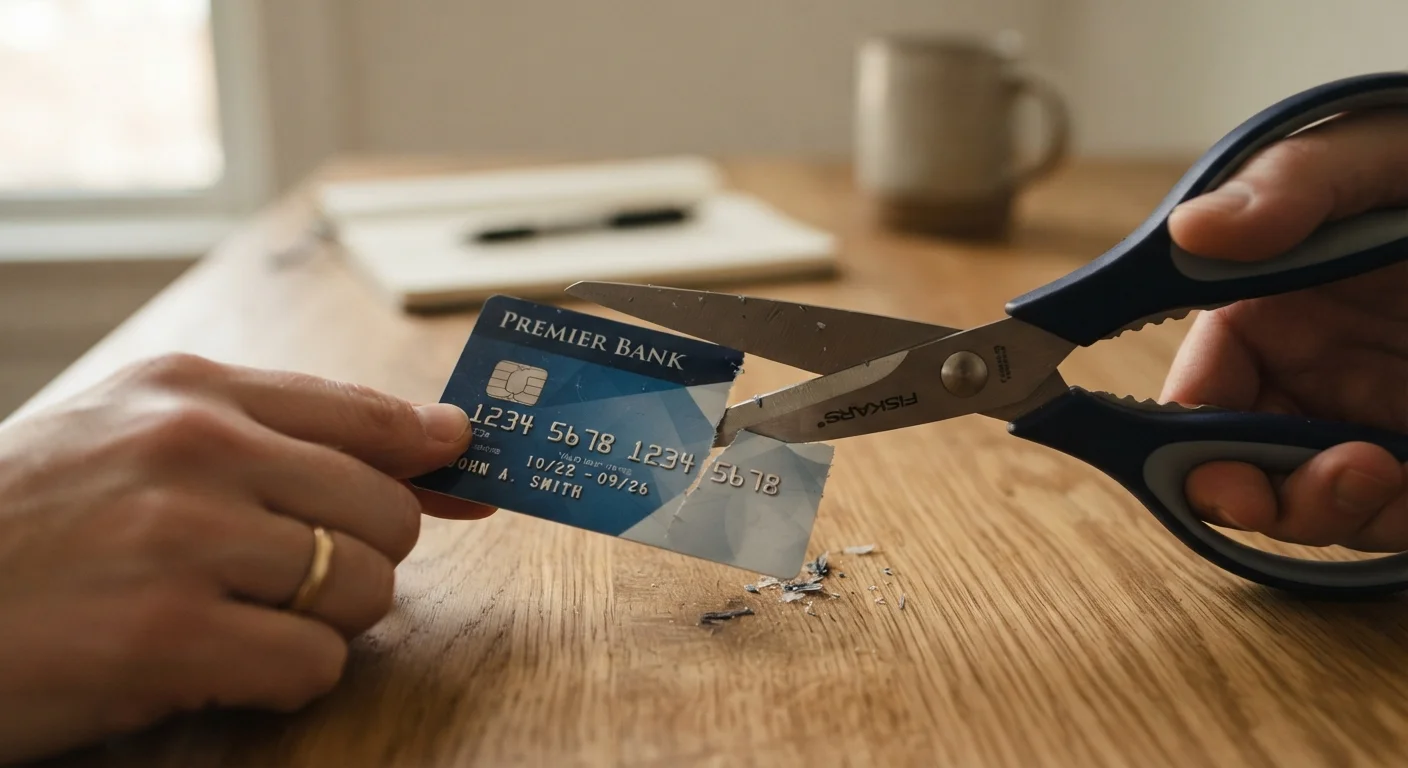
Closing a card you no longer use sounds sensible — but it can backfire. Discover the credit-score mechanics that often catch people off guard.
Key takeaways
- Closing a credit card reduces your total available credit, which can raise your credit utilization ratio and lower your score.
- Positive account history from a closed card can remain on your credit report for up to 10 years.
- A longer average account age generally benefits your credit score — closing old cards shortens it.
- Keeping a zero-balance card open is often better for your score than closing it to avoid temptation.
- The impact of closing a card depends on your overall credit profile — consult a financial adviser for personalized guidance.
Why This Decision Is Bigger Than It Looks
Canceling a credit card you haven't touched in months seems like a straightforward act of financial housekeeping. One less account to monitor, one less annual fee to consider, one less source of potential overspending. It feels disciplined.
The problem is that credit scores don't reward tidiness — they reward specific behaviors tracked across time. Closing an account quietly reshapes several of the factors that scoring models weigh, sometimes in ways that take months to surface. Before you pick up the scissors, it's worth understanding exactly what changes and what doesn't.
This article walks through the most persistent myths about closing old cards and replaces them with a clearer picture of how the mechanics actually work. For a broader look at how your full credit profile fits together, see the end-to-end credit and debt resource.
Myth
Closing a card removes it from my credit report immediately, wiping out any record of it.
Fact
Closed accounts — especially those with positive history — typically remain on your credit report for up to 10 years.
Credit bureaus don't erase closed accounts right away. If an account was in good standing, its history continues to age beneficially for roughly a decade after closure. This means the positive payment record you built up doesn't vanish when you cancel the card. What does disappear immediately is the card's available credit limit, which can affect your utilization ratio from the moment the account is reported as closed.
Myth
If I'm not using a card, closing it can't hurt my credit score.
Fact
An unused card still contributes available credit to your utilization ratio and account history — closing it affects both.
Even a card sitting untouched in a drawer plays a role in your credit profile. Its credit limit lowers your overall utilization ratio, and its age contributes to your average account age. Removing it eliminates both benefits simultaneously. If you carry any balances on other cards, the utilization impact can be immediate and meaningful. For context on how utilization interacts with your broader debt picture, see our article on why minimum payments keep you in debt longer.
Myth
Closing old cards is a good way to raise my credit score by simplifying my accounts.
Fact
Simplifying accounts doesn't improve scores — scoring models reward depth of history and low utilization, not fewer open accounts.
There is no credit-score benefit to having fewer accounts on their own. Scoring models look at factors like payment history, utilization, length of credit history, and the mix of account types. Closing accounts can negatively affect three of those five major categories at once. Keeping a card open with a zero balance is, in many cases, the option that preserves the most credit-score value — provided there's no annual fee making that impractical.
Myth
Once a card is closed, my account age resets to zero for that account.
Fact
The account's age is frozen at the point of closure but continues to count toward your credit history while it remains on your report.
Scoring models recognize the age of closed accounts for as long as those accounts appear on your report. A 12-year-old closed card still counts as a 12-year-old account in the average age calculation — until the bureau removes it, typically after 10 years. The real risk to account age comes later, when the closed account eventually ages off and is no longer factored in, which can shorten your average account age and nudge your score downward.
Myth
Closing a card with a zero balance has no effect because you owe nothing on it.
Fact
Your balance is irrelevant to the utilization impact — what matters is that the card's credit limit disappears from your available total.
Utilization is calculated across all open revolving accounts: total balances divided by total credit limits. A zero-balance card contributes zero to the numerator but its full limit to the denominator, which keeps utilization lower. Remove that limit by closing the account, and the same balances on remaining cards now represent a larger share of a smaller total — raising utilization even though you didn't borrow a single additional dollar.
What Closing a Card Actually Does to Your Profile
Two numbers matter most when a card closes: your credit utilization ratio (the share of your total available credit you're currently using) and your average age of accounts. Both can shift immediately.
If you carry balances on other cards, removing an unused card's credit limit from the denominator of the utilization calculation raises that ratio overnight. Scoring models — including the widely used FICO models — treat lower utilization favorably, so a sudden spike upward often means a score drop. The magnitude depends on how much of your total available credit that one card represented.
Closing Your Oldest Card Carries the Most Risk
If the card you're considering closing is your oldest account, the long-term impact on your credit profile can be more significant than closing a newer one. Your oldest account anchors your credit history length — a factor that scoring models weigh when assessing creditworthiness. Once that account eventually ages off your report (typically after 10 years), your average account age may drop noticeably. If you're planning any major credit applications in the next few years, preserving that history is generally worth the inconvenience of keeping the account open.
Average account age is subtler. While a closed account's history stays visible on your report for years, once it eventually ages off, the accounts remaining pull your average downward — particularly if the card you closed was one of your oldest. You can learn how to read these entries accurately in our guide to reading your credit report without getting lost.
None of this means closing a card is always the wrong call. If a card carries a fee that outweighs any benefit, or if keeping it open creates genuine spending risk, the calculus shifts. The point is to make the decision with accurate information rather than assumptions.
30%
Weight of credit utilization in FICO score calculation
According to FICO's published scoring criteria, amounts owed — which includes credit utilization — accounts for 30% of a base FICO score, making it the second-largest factor after payment history.
10 years
How long positive closed accounts stay on your report
The Consumer Financial Protection Bureau notes that accounts closed in good standing typically remain on a credit report for up to 10 years, continuing to contribute to credit history during that time.
15%
Weight of credit history length in FICO scoring
FICO's published model attributes roughly 15% of a base score to the length of credit history, encompassing average account age and the age of the oldest account.
For a look at other underestimated habits that chip away at scores, surprising everyday behaviors that quietly dent your credit score covers some less obvious culprits.
This article is for general informational purposes only and does not constitute personalized financial or credit advice. Credit scoring models vary by lender. Consult a qualified financial professional before making decisions based on your individual circumstances.
All published content on this website is for informational and educational purposes only and should not be taken as professional advice. We recommend that readers seek expert opinion before making any decisions. The website is not responsible for any actions taken based on the information provided on this website. We are not liable for any inaccuracies, modifications, or omissions in information. Moreover, external links or third-party content are provided for convenience; we are not liable for their correctness. Users are advised to verify every piece of information before they use it for any purpose.