
Natural Pest Control Methods Worth Knowing About

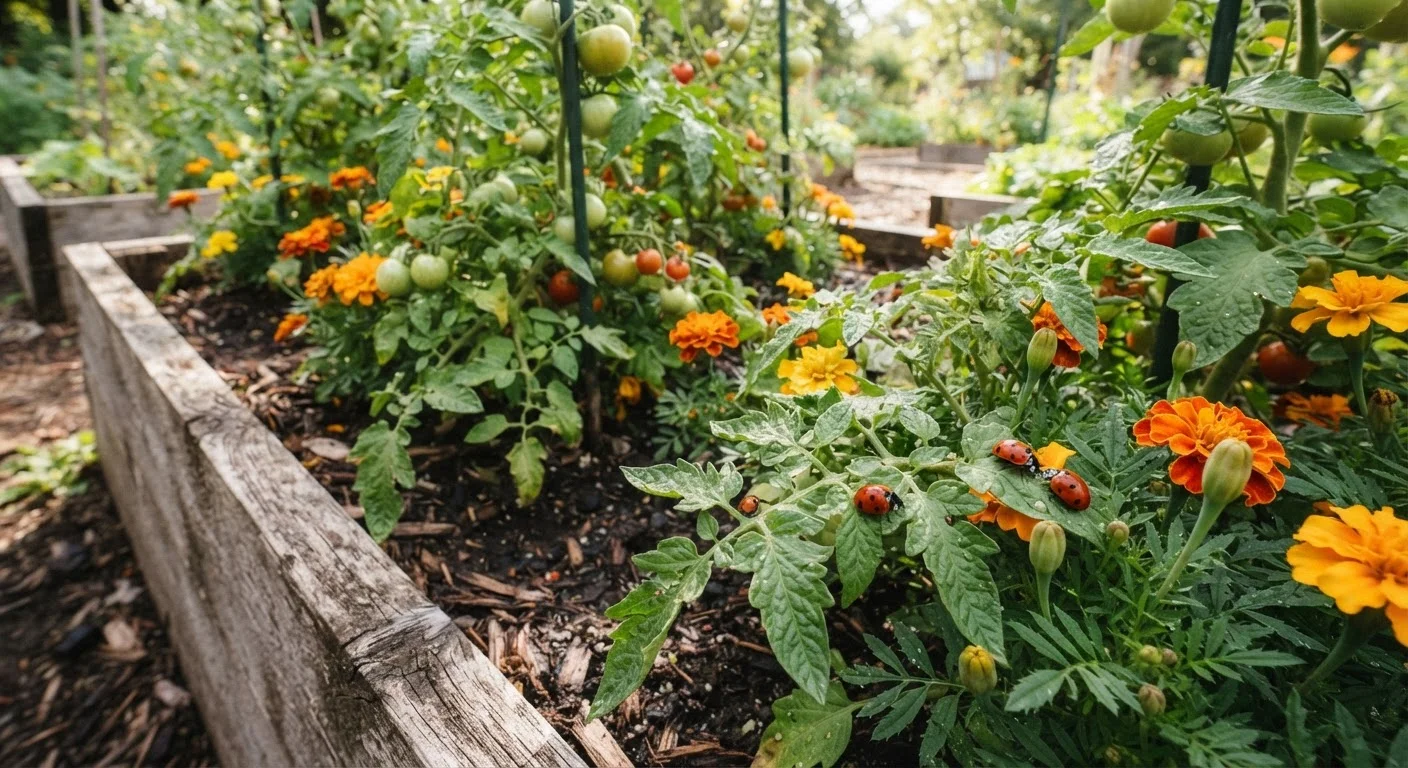
A look at companion planting, physical barriers, and other non-chemical approaches to managing common garden pests.
Key takeaways
- Companion planting uses plant relationships to deter pests without any chemicals.
- Physical barriers like row covers and copper tape block pests before they reach your plants.
- Beneficial insects and birds can be recruited as natural allies against garden pests.
- Consistent garden hygiene — removing debris and rotating crops — disrupts pest life cycles.
- Homemade sprays using common kitchen ingredients can manage soft-bodied pest populations.
Why Non-Chemical Approaches Deserve a Place in Your Garden
Pesticides — even products marketed as safe or organic — can have unintended consequences: harming pollinators, disrupting beneficial soil organisms, or leaving residues on food crops. That's why many experienced gardeners treat chemical intervention as a last resort rather than a first response. Non-chemical pest management isn't a single technique; it's a layered toolkit built on observation, timing, and an understanding of how your garden ecosystem actually works.
The methods covered here are practical, low-cost, and applicable across garden types — from traditional in-ground plots (see the raised beds vs. in-ground comparison for how bed type can affect pest exposure) to container setups on a balcony. Results won't always be immediate, and some seasons will be harder than others, but building these habits into your regular garden routine pays real dividends over time.
No Single Method Works in Isolation
Natural pest control is most effective when several strategies are used together — what practitioners call an Integrated Pest Management (IPM) approach. Companion planting, barriers, and beneficial insects each address different vulnerabilities and life stages. Expecting any single method to eliminate pest pressure entirely is likely to lead to frustration; think in terms of managing populations rather than eradicating them.
Six Natural Pest Control Methods Worth Building Into Your Routine
Companion Planting
Companion planting is the practice of growing certain plants near one another because their proximity provides mutual benefit — particularly pest deterrence. Many aromatic herbs and flowers release chemical compounds or strong scents that confuse or repel specific insects.
Classic examples include planting marigolds near tomatoes and peppers to deter aphids and whiteflies, or growing basil alongside cucumbers to discourage beetles. Nasturtiums are often used as a trap crop — a plant that attracts pests like aphids away from more valuable vegetables, concentrating them in one place where they can be removed.
It takes some planning to use companion planting effectively, and results vary by region and season. Treat it as a supporting strategy rather than a standalone solution, and consult a regional planting guide to find pairings suited to your climate.
Marigolds near tomatoes help deter aphids and whiteflies without a single chemical spray.
Physical Barriers and Row Covers
Sometimes the most direct approach is simply keeping pests away from plants mechanically. Floating row covers — lightweight, breathable fabric draped over crops — block insects like cabbage moths, carrot flies, and flea beetles from ever reaching foliage or soil. They let light and water through while forming a physical shield.
For slugs and snails, copper tape affixed around container rims or raised bed edges is widely used; slugs are believed to react to a mild electrical charge when they contact the copper. Diatomaceous earth (a powder made from fossilized algae) sprinkled around plant bases can deter crawling insects by abrading their exoskeletons — though it needs reapplication after rain and should not be inhaled during application.
These methods work best as prevention — install barriers before pest pressure peaks, ideally at planting time. Refer to the gardening calendar for timing advice by season.
Row covers installed at planting time stop insects before infestations can take hold.
Attracting Beneficial Insects
Not all insects are enemies. Ladybugs, lacewings, parasitic wasps, ground beetles, and hoverflies are among the predatory or parasitic insects that feed on common garden pests like aphids, caterpillars, and mites. Supporting populations of these beneficial insects is one of the most sustainable long-term pest strategies available.
To encourage them, plant a variety of flowering plants — particularly those with small, open blooms like dill, fennel, yarrow, and sweet alyssum — that provide nectar and pollen to adult beneficial insects. Avoid broad-spectrum pesticides, even organic ones, which can harm beneficial populations alongside pests.
Providing habitat also helps: leaving some leaf litter undisturbed, installing insect hotels, and maintaining a water source all contribute to a garden environment where natural predators can thrive and reproduce.
A diverse planting of flowering herbs invites the predatory insects that keep pest populations in check.
Homemade Sprays for Soft-Bodied Pests
Several simple liquid preparations can reduce populations of soft-bodied pests like aphids, spider mites, and mealybugs. These aren't commercial formulations — they're straightforward kitchen-ingredient solutions used by many gardeners as a first response to minor infestations.
Insecticidal soap spray: A diluted solution of pure liquid castile soap and water, applied directly to pests, disrupts their cell membranes on contact. It has minimal residual effect, meaning it breaks down quickly and doesn't linger in soil. Avoid spraying during peak sun hours to prevent leaf burn.
Neem oil spray: Derived from the seeds of the neem tree, neem oil disrupts insect feeding, molting, and reproduction. It works best as a preventive or early-treatment measure. Follow dilution instructions carefully and apply in the early morning or evening.
Always test any spray on a small section of foliage before treating an entire plant, and avoid applying to open flowers where pollinators may be present.
Insecticidal soap and neem oil sprays break down quickly and leave minimal residue in your soil.
Crop Rotation and Garden Hygiene
Many soil-dwelling pests and diseases survive winter by overwintering in plant debris or in the soil near the crops they fed on the previous season. Moving plant families to different beds each year — a practice called crop rotation — denies pests a predictable food source and breaks their reproductive cycle.
The general guideline is to avoid planting the same botanical family in the same location more than once every three to four years. This matters most for nightshades (tomatoes, peppers, eggplants), brassicas (cabbage, kale, broccoli), and alliums (onions, garlic).
Regular garden hygiene rounds out this approach: remove spent plant material promptly, clear fallen fruit, and avoid leaving diseased foliage to decompose in beds. Good hygiene also means checking the undersides of leaves regularly for early pest activity — caught early, many infestations can be managed with a firm spray of water or hand-removal before they escalate. These habits pair well with thoughtful bed preparation; see our new garden bed checklist for setup tips that reduce pest risk from the start.
Rotating crops by botanical family each season disrupts pest cycles more effectively than any single spray.
Encouraging Birds and Other Predators
Birds are highly effective pest controllers — a single chickadee can consume hundreds of caterpillars and insect larvae in a day. Encouraging birds into the garden by installing feeders, birdbaths, and nesting boxes can meaningfully reduce pressure from caterpillars, beetles, and grubs, particularly during the growing season when birds are feeding young.
Toads and frogs are similarly valuable allies, consuming large numbers of slugs, beetles, and mosquitoes. Providing a shallow water dish at ground level or a small pond creates habitat for amphibians. Ground beetles, which are also predatory, benefit from thick mulch and undisturbed soil margins where they can shelter during the day.
These relationships develop gradually — building a garden ecosystem that supports predators takes seasons, not weeks. Patience and consistent habitat support yield compounding benefits over time. This approach works across garden types; even container gardeners can benefit, as discussed in our container gardening guide.
Birds and toads are low-maintenance pest controllers — the key is giving them habitat to stay.
Putting It All Together
Natural pest control is fundamentally about working with your garden's biology rather than against it. Each method above addresses a different entry point in the pest cycle — deterrence, physical exclusion, predation, population management, and disruption of breeding habitat. Used together, they create overlapping layers of protection that are more resilient than any single approach.
Start with the strategies that fit your current garden setup and skill level. Good watering practices also support plant health and reduce stress-related pest susceptibility — a detail often overlooked. Over time, as you observe which pests are most active in your specific conditions and which deterrents prove most effective, you'll be able to refine your approach into something tailored to your own growing space.
All published content on this website is for informational and educational purposes only and should not be taken as professional advice. We recommend that readers seek expert opinion before making any decisions. The website is not responsible for any actions taken based on the information provided on this website. We are not liable for any inaccuracies, modifications, or omissions in information. Moreover, external links or third-party content are provided for convenience; we are not liable for their correctness. Users are advised to verify every piece of information before they use it for any purpose.