
E-Bikes as a Commuting Tool: What They Can and Can't Do

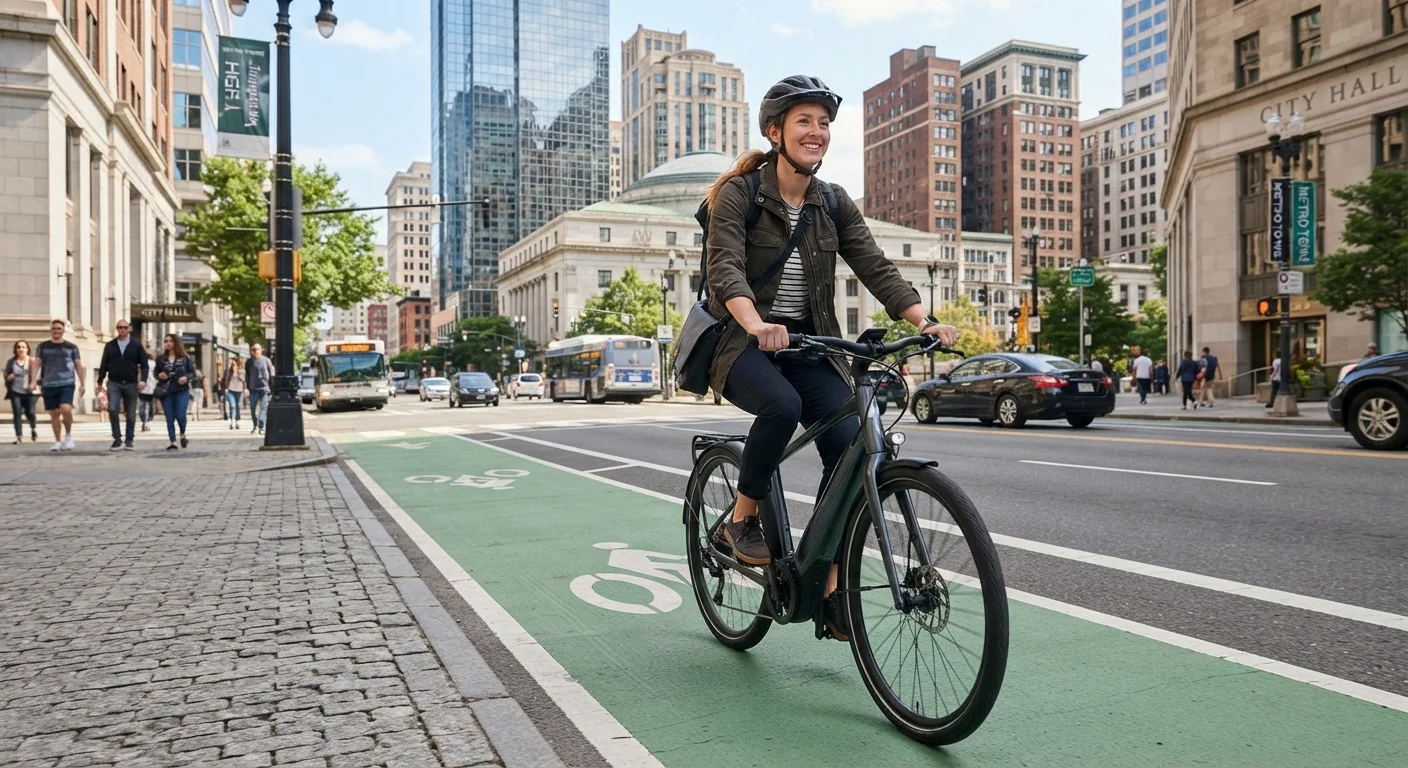
Electric bikes open commuting to more people, but they come with trade-offs. A balanced look at range, cost, safety, and practicality.
Our Verdict
E-bikes are a genuinely practical commuting tool for a large segment of American workers — particularly those with moderate distances, hilly terrain, or physical limitations that make traditional cycling impractical. They aren't a perfect replacement for every car trip, and the upfront investment, weather sensitivity, and regulatory patchwork require real consideration. But for riders whose routes and infrastructure support them, the daily cost savings and reduced commute stress make a compelling case.
Best for commuters who live within roughly 20 miles of work, have access to secure bike parking, and want to cut fuel and parking costs without giving up speed or arriving sweaty.
Key takeaways
- E-bikes extend the practical commuting range well beyond what a conventional bicycle can cover.
- Upfront costs are significantly higher than traditional bikes, though ongoing expenses are low.
- Weather, terrain, secure storage, and local infrastructure all affect real-world usability.
- Class and speed regulations vary by state, so riders need to verify local rules before commuting.
- E-bikes work best as a primary or complementary commute mode within roughly 15–20 miles of the workplace.
What an E-Bike Actually Does for a Commuter
An electric bike uses a battery-powered motor to assist your pedaling — it doesn't replace it entirely on most models. The motor kicks in as you pedal, reducing the effort needed to maintain speed, climb hills, or cover longer distances. That distinction matters for commuters: you still get physical activity, but you control how much exertion you put in.
Federal law classifies most consumer e-bikes into three categories based on top assisted speed and whether they have a throttle. Class 1 bikes provide pedal assist up to 20 mph; Class 2 adds a throttle; Class 3 bikes assist up to 28 mph. State and local governments layer additional rules on top of this — some cities restrict Class 3 bikes from shared bike paths, while others have no e-bike regulations at all. Before commuting regularly, check your municipality's rules.
For a realistic picture of what e-bikes can replace, consider the average American commute. The U.S. Census Bureau has consistently reported one-way commute distances clustering around 10–15 miles for many workers, a range most mid-tier e-bikes handle comfortably on a single charge. That's the sweet spot where e-bikes genuinely compete with cars and public transit on time and cost.
For broader context on rethinking how you get to work, see strategies that actually save commute time.
The Real Advantages
E-bikes solve several friction points that have historically kept people in their cars.
Extends practical cycling range significantly
Motor assist makes 10–20 mile commutes feasible for people who wouldn't attempt them on a conventional bike, broadening who can realistically cycle to work.
Dramatically lower per-mile cost than driving
Electricity for charging typically costs less than $0.10 per charge, and e-bikes avoid gas, parking fees, and much of the maintenance burden of a car.
Reduces arrival sweat and physical strain
Pedal assist lets riders manage exertion, making it realistic to arrive at work in office-appropriate condition without a full shower and wardrobe change.
Faster than traditional cycling in urban traffic
Class 3 e-bikes can sustain 25–28 mph, often matching or beating average car speeds in congested city traffic during peak commute hours.
Bypasses parking scarcity and cost
E-bikes can park in bike racks or indoor storage, sidestepping the expensive, time-consuming parking search that plagues drivers in dense urban areas.
Provides daily physical activity with flexibility
Riders get moderate aerobic exercise on every commute trip, with the option to increase effort on days they feel energetic or reduce it when they don't.
The cost argument is particularly strong over time. Charging an e-bike battery typically costs pennies per charge — a fraction of what a gallon of gas or a monthly transit pass costs. Maintenance is also simpler and cheaper than a car's, with no oil changes, transmission service, or smog checks required.
For commuters who've considered traditional cycling but worry about hills or arriving at the office soaked in sweat, the motor assist changes the equation entirely. You can dial effort up or down based on how you feel that morning. See how to make bike commuting fit a normal schedule for practical tips on managing the transition.
The Real Limitations
No commuting tool is right for every situation, and e-bikes come with genuine trade-offs that are worth weighing honestly.
High upfront purchase cost
Quality commuter e-bikes typically cost $1,500–$4,000 or more, a significant barrier compared to a transit pass or even a conventional bicycle.
Battery range limits longer commutes
Most e-bikes offer 20–60 miles of assisted range per charge, with real-world range affected by hills, rider weight, assist level, and temperature — particularly cold weather.
Theft risk is high without secure storage
The same high value that makes e-bikes an investment makes them attractive targets; without covered, secured parking at your destination, the risk of loss is real.
Weather significantly affects usability
Rain, ice, and extreme cold reduce both rider comfort and battery performance, making year-round e-bike commuting impractical in many northern US climates without a backup plan.
Regulatory rules vary and can restrict routes
Class 3 e-bikes are prohibited on many shared paths and trails, and state rules differ enough that riders need to actively verify what's permitted on their specific route.
Infrastructure gaps create safety risks
Many US commute routes lack protected bike lanes, forcing riders to navigate high-speed arterial roads that increase collision exposure and commute stress.
~$0.08
Typical cost to fully charge an e-bike battery
Based on average US residential electricity rates and standard 400–500 Wh battery capacities commonly found on commuter e-bikes.
20–60 miles
Typical assisted range per charge
Manufacturer-rated range under ideal conditions; real-world range varies based on terrain, rider weight, assist level, and ambient temperature.
$1,500+
Starting price for quality commuter e-bikes
Entry-level commuter-grade e-bikes from established manufacturers generally start around this price; purpose-built commuter models with integrated lights and racks often cost more.
Theft is a practical concern many buyers underestimate. A quality commuter e-bike costs $1,500–$4,000 or more, making it a high-value theft target. Secure, covered parking at your workplace is close to a prerequisite — something many offices and transit hubs don't yet provide. If your destination only offers a sidewalk rack in an exposed area, that's a real risk to plan around.
Weather is the other variable that trips up optimistic estimates. Rain, ice, and extreme cold all reduce both your willingness to ride and battery range. Most commuters who rely on e-bikes year-round in northern climates develop a backup plan — whether that's occasional transit use or occasional car trips. Understanding your public transit options in advance makes that fallback much less stressful.
Infrastructure and Safety Realities
An e-bike's usefulness is heavily shaped by what's between your front door and your workplace. Protected bike lanes, smooth road surfaces, and low-traffic routes make e-bike commuting genuinely pleasant and safe. Pothole-riddled shoulders, multi-lane arterials with no bike infrastructure, and high-speed traffic make it stressful and riskier.
E-Bike Classifications Affect Where You Can Ride
The three-class federal framework for e-bikes provides a baseline, but states and municipalities can and do impose their own rules. Some jurisdictions require registration or age minimums for Class 3 bikes; others restrict all motorized bikes from multi-use trails. Before establishing a regular commute route, verify current rules with your state DMV and any local parks or transit authorities whose infrastructure you'd use.
Safety gear matters more on an e-bike than a traditional bicycle because speeds are higher. A helmet rated for e-bike use (often labeled as meeting CPSC or ASTM F1952 standards) provides meaningfully better protection than a basic recreational helmet. High-visibility clothing and front and rear lights — ideally running even in daylight — significantly reduce collision risk in urban traffic.
Before committing to an e-bike route, ride or drive it at commute time to assess actual conditions. A route that looks reasonable on a map may have a half-mile stretch with no shoulder and 45 mph traffic that makes it impractical. A structured checklist for evaluating a new commute mode can help you assess this systematically before you invest.
Is an E-Bike Right for Your Commute?
The honest answer depends on a few concrete factors: your one-way distance, the quality of your local bike infrastructure, secure parking availability at your destination, your climate, and your budget for the upfront purchase.
E-bikes are not a cost-saving tool in the short run — they're a medium- to long-term investment. If you replace a daily car commute with regular e-bike use, you may recover the purchase price through fuel, parking, and maintenance savings over one to three years, depending on your specific situation. That payoff isn't guaranteed, and individual costs vary considerably.
They also aren't a full replacement for every car trip. Grocery runs in the rain, school pickups, and long weekend drives still require a car for most households. The more realistic framing is that an e-bike replaces some car trips, some of the time — which for many commuters is more than enough to justify the investment. If you're still weighing all your alternatives, many commuters have more options than they realize.
All published content on this website is for informational and educational purposes only and should not be taken as professional advice. We recommend that readers seek expert opinion before making any decisions. The website is not responsible for any actions taken based on the information provided on this website. We are not liable for any inaccuracies, modifications, or omissions in information. Moreover, external links or third-party content are provided for convenience; we are not liable for their correctness. Users are advised to verify every piece of information before they use it for any purpose.