
Commuter Rail, Light Rail, and Bus Rapid Transit: What Sets Them Apart

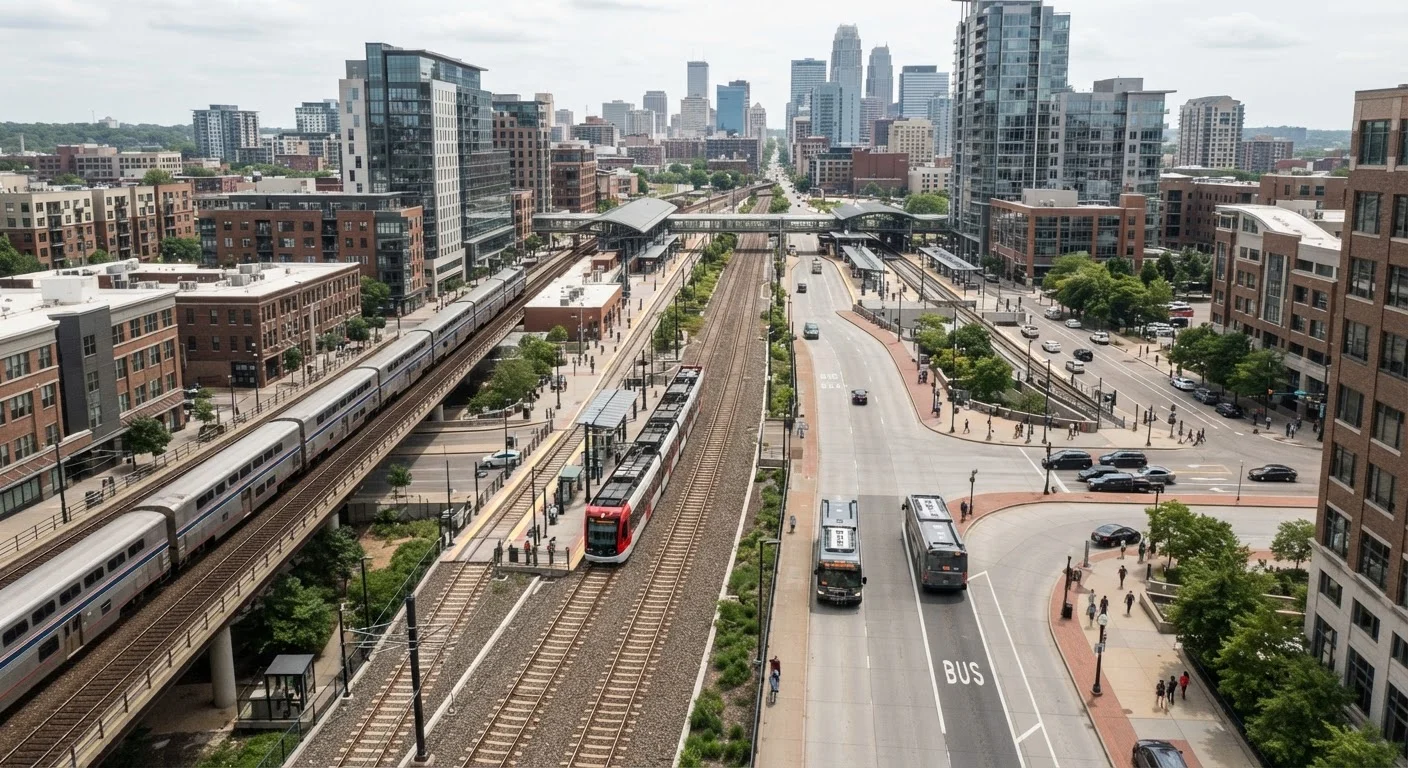
These three public transit systems look similar but work very differently. Learn how each one operates and which fits different commuting needs.
Our Verdict
Commuter rail, light rail, and BRT are each engineered for different scales of travel. No single system is universally superior — the best fit depends on trip distance, urban density, and what infrastructure already exists in a given region. Understanding the distinctions helps commuters choose strategically and helps communities advocate for investments that match their actual needs.
| Best for | Recommended |
|---|---|
| Long-distance suburban or exurban commuters traveling into a downtown core | Commuter Rail |
| Urban and inner-suburban riders making medium-distance trips across a city | Light Rail |
| Cities seeking faster, more reliable bus service without heavy rail construction costs | Bus Rapid Transit |
| Commuters prioritizing flexibility and lowest infrastructure investment | Bus Rapid Transit |
Key takeaways
- Commuter rail covers long suburban-to-downtown distances with fewer stops and higher capacity.
- Light rail operates in urban and suburban corridors, often sharing street-level space with other traffic.
- Bus Rapid Transit (BRT) uses dedicated lanes and pre-boarding payment to mimic rail speed at lower cost.
- The right transit mode depends on distance, density, existing infrastructure, and local funding.
- All three systems can meaningfully reduce commuting costs compared to daily car ownership.
Why the Distinctions Actually Matter
To the average person standing at a platform or shelter, public transit can look like a single category. In practice, commuter rail, light rail, and Bus Rapid Transit — commonly called BRT — are three structurally different systems built to solve different problems. Mixing them up leads to mismatched expectations: a commuter rail pass won't help you cross a city neighborhood, and a BRT route won't whisk you 40 miles to an outlying suburb.
If you've ever wondered why transit debates in your city get so complicated, the answer often comes down to which mode planners are choosing and why. Many commuters underestimate their transit options because they lump these systems together. Breaking them apart reveals a practical toolkit for smarter daily travel.
Commuter Rail: Built for Distance
Commuter rail — sometimes called regional rail or suburban rail — is designed for one primary job: moving large volumes of passengers between outer suburbs (or exurban areas) and a central business district. Lines are typically 20 to 80 miles long, stops are spaced several miles apart, and trains run on dedicated freight or shared heavy-rail tracks.
Key characteristics of commuter rail systems include:
- High capacity: Multi-car trains can carry hundreds of passengers per departure.
- Peak-hour scheduling: Most commuter rail systems run frequent service during morning and evening rush hours, with limited or no midday and weekend service.
- Station-based boarding: Passengers pay at gated stations or on board; proof-of-payment systems are common.
- Speed: Top speeds of 60–90 mph are typical, with average trip speeds much higher than local transit.
Well-known examples include the Metra system in the Chicago region, NJ Transit Rail in New Jersey, and the LIRR serving Long Island. The trade-off is cost — both to riders and to the agencies that operate them. Commuter rail requires significant infrastructure and typically receives dedicated public subsidies.
| Commuter Rail | Light Rail | Bus Rapid Transit | |
|---|---|---|---|
| Typical trip distance | 20–80 miles | 5–25 miles | 5–20 miles |
| Stop spacing | 2–10 miles apart | 0.5–2 miles apart | 0.25–1 mile apart |
| Service hours | Peak hours primarily | All-day, 7 days | All-day, 7 days |
| Infrastructure cost | Very high | High | Moderate |
| Typical speed (avg.) | 30–60 mph | 15–30 mph | 12–25 mph |
| Right-of-way | Fully dedicated track | Dedicated or shared | Dedicated lanes (ideal) |
| Capacity per vehicle | High (multi-car trains) | Medium (1–3 car trains) | Lower (articulated bus) |
| US examples | Metra, LIRR, NJ Transit Rail | Denver RTD, Dallas DART | Cleveland Healthline, LA Orange Line |
Light Rail: The Urban Workhorse
Light rail transit (LRT) operates in a different niche. Rather than moving people long distances from suburb to city center, light rail is built to carry riders across urban and inner-suburban corridors — connecting neighborhoods, employment centers, hospitals, universities, and transit hubs within a metro area.
Defining features of light rail include:
- Electrified, rail-based vehicles: Trains draw power from overhead wires or, in some systems, ground-level rails.
- Shorter stop spacing: Stations are typically spaced a half-mile to two miles apart, serving denser areas.
- Mixed or dedicated right-of-way: Some segments run in dedicated lanes; others share street space with cars, meaning speed varies.
- All-day service: Unlike commuter rail, light rail typically runs consistent service throughout the day and on weekends.
Light rail systems exist in dozens of American cities, including Denver, Dallas, Minneapolis, and Portland. Capital costs are substantial — track, vehicles, and electrical infrastructure are all expensive — but the systems tend to attract higher ridership by being more accessible throughout the day.
Bus Rapid Transit: Speed Without the Rails
BRT is the newest of the three concepts and arguably the most misunderstood. At its core, BRT tries to deliver rail-like reliability and speed using buses — but only when its defining features are fully implemented. The key word is rapid: a BRT system without dedicated lanes and off-board fare payment is really just a labeled bus route.
Genuine BRT systems share these traits:
- Dedicated bus lanes: Buses travel in lanes separated from general traffic, eliminating the main cause of bus slowdowns.
- Off-board fare payment: Riders pay before boarding (via platform kiosks or apps), cutting dwell time at stops dramatically.
- Level boarding: Station platforms align with bus floors, speeding passenger flow — especially important for riders with mobility needs.
- High frequency: Headways of 10 minutes or less, similar to rail systems, are a hallmark of well-functioning BRT.
BRT's primary advantage is cost. Building a BRT corridor typically costs a fraction of light rail construction, allowing cities with limited capital budgets to upgrade service meaningfully. The Healthline in Cleveland and the aBRT lines in Minneapolis are frequently cited as strong domestic examples. Strategies that actually save commute time often include using BRT where rail doesn't yet exist.
Choosing the Right System for Your Commute
Understanding these systems as a rider changes how you approach your daily commute. If you live 30 miles from downtown, a commuter rail line — if one serves your corridor — will almost always be faster than any local transit option. If you need to cross the city during midday, light rail's all-day frequency beats commuter rail's limited schedule. And if you're in a city still building out its transit network, a well-designed BRT route may be your most practical rapid-transit option for years to come.
A few practical questions can help you identify which system fits your trip:
- How far are you traveling? Over 20 miles, commuter rail is usually the fastest option where available.
- Do you need off-peak service? Light rail and BRT are more likely to serve you outside rush hours.
- What's the frequency? Higher-frequency services reduce the cost of missing a departure, making your overall commute less stressful.
If you're new to using any of these systems, everything you need to know before commuting by public transit covers fares, passes, apps, and what to expect on your first trip. And for navigating multiple systems across a single commute, real-time transit tools and route planners can simplify the process considerably.
For a broader look at commuter terminology, pass types, and tax benefits, see the complete reference for American commuters.
All published content on this website is for informational and educational purposes only and should not be taken as professional advice. We recommend that readers seek expert opinion before making any decisions. The website is not responsible for any actions taken based on the information provided on this website. We are not liable for any inaccuracies, modifications, or omissions in information. Moreover, external links or third-party content are provided for convenience; we are not liable for their correctness. Users are advised to verify every piece of information before they use it for any purpose.