
Synthetic vs Conventional Motor Oil: What Sets Them Apart

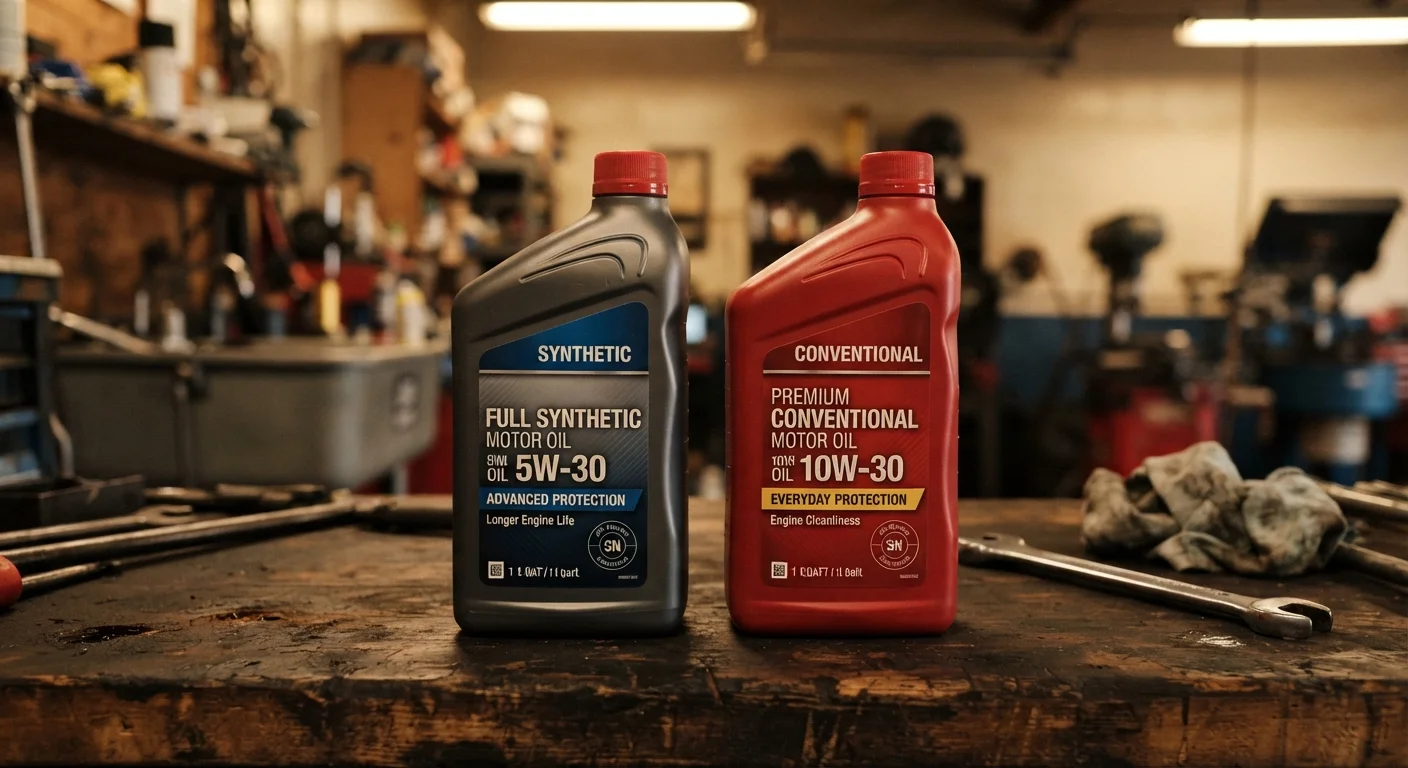
A clear side-by-side look at how synthetic and conventional motor oils differ in performance, longevity, and suitability for different engines.
Option A
Synthetic Motor Oil
The engineered, high-performance lubricant.
Best for: Best for modern engines, extreme temperatures, high-mileage vehicles, and drivers who want longer intervals between oil changes.
Option B
Conventional Motor Oil
The refined, time-tested petroleum-based option.
Best for: Best for older engines with simpler designs, light-duty driving, and drivers whose manufacturer specs permit it.
Key takeaways
- Synthetic oil is chemically engineered for more uniform molecule structure, giving it superior performance at temperature extremes.
- Conventional oil is refined from crude petroleum and generally costs less per quart, but requires more frequent changes.
- Most modern vehicles are factory-filled with synthetic or synthetic-blend oil and are designed around longer change intervals.
- Always follow your owner's manual — using the wrong oil type can void warranties or reduce engine protection.
- Switching from conventional to full synthetic in an older, high-mileage engine should be done carefully and ideally after consulting a mechanic.
What Each Oil Actually Is
The fundamental difference between synthetic and conventional motor oil starts at the molecular level. Conventional motor oil is refined directly from crude petroleum. During refining, impurities are removed and additives are blended in, but the base oil still contains naturally occurring variations in molecule size and shape. Those inconsistencies limit how well it performs under stress.
Synthetic motor oil, by contrast, is chemically built from scratch — typically using a base like polyalphaolefin (PAO) or other engineered compounds. The molecules are uniform in size and shape, which translates to more consistent lubrication, less internal friction, and better stability across a wide temperature range.
There's also a middle-ground product: synthetic-blend oil, which mixes conventional base oil with synthetic base stocks. It offers a performance improvement over straight conventional oil at a lower price point than full synthetic. For a deeper look at how viscosity grades interact with oil type, see our guide to engine oil viscosity and change intervals.
Performance Differences That Actually Matter
For everyday drivers, the performance gap between synthetic and conventional oil shows up in a few key areas:
- Cold starts: On a cold morning, oil needs to flow immediately to protect engine parts before heat builds up. Synthetic oil flows more readily at low temperatures, reducing wear during those critical first seconds of operation.
- Heat resistance: Under sustained high temperatures — think stop-and-go traffic in summer, towing, or hard highway driving — conventional oil can break down and thicken faster. Synthetic holds its viscosity (resistance to flow) longer.
- Engine cleanliness: Synthetic oils tend to carry combustion byproducts and contaminants more effectively to the oil filter, leaving less sludge behind. Conventional oil, especially when pushed past its change interval, can leave deposits that accumulate over time.
- Oxidation resistance: Synthetic oil resists oxidation — the chemical breakdown caused by heat and oxygen exposure — better than conventional, which is a key reason it can last longer between changes.
| Criterion | Synthetic Motor Oil | Conventional Motor Oil |
|---|---|---|
| Base material | Chemically engineered compounds | Refined crude petroleum |
| Cold-weather flow | Excellent — flows quickly at low temps | Slower — thickens more in cold |
| Heat resistance | High — resists breakdown under heat | Moderate — degrades faster under heat |
| Typical change interval | 7,500–10,000+ miles (varies by vehicle) | 3,000–5,000 miles |
| Cost per quart | Higher | Lower |
| Engine cleanliness | Better sludge control | More deposit risk if interval is missed |
| Best engine fit | Modern, turbocharged, high-performance | Older, simpler engine designs |
None of this means conventional oil is unsafe for engines designed to use it. The critical qualifier is always your manufacturer's specification.
Cost, Change Intervals, and the Real Math
Synthetic oil costs more per quart — often two to four times the price of conventional. But that upfront cost doesn't tell the whole story. Because synthetic oil degrades more slowly, manufacturers typically approve longer change intervals for vehicles using it. Many modern vehicles running full synthetic are rated for 7,500 to 10,000 miles between changes, and some go longer depending on the vehicle's oil life monitoring system.
Conventional oil, by contrast, is often recommended for changes every 3,000 to 5,000 miles — though the old blanket "3,000-mile rule" is widely considered outdated for most modern vehicles. Our article on common car maintenance myths covers why that rule persists and when it actually applies.
When you account for the frequency of changes, the total annual cost difference between the two oil types narrows considerably for many drivers. The math ultimately depends on your vehicle, your driving pattern, and local service costs.
Oil Life Monitors vs. Fixed Intervals
Many vehicles built in the last decade include an oil life monitoring system that calculates change intervals based on actual driving conditions — not just mileage. If your vehicle has one, it's generally more accurate than following a fixed mileage rule. However, these systems are designed around the oil type your manufacturer specifies, so using the correct oil is still essential for the monitor to work as intended.
Which Oil Is Right for Your Engine?
The most important factor is straightforward: check your owner's manual. Manufacturers specify the oil type and viscosity grade your engine was engineered to use. Using an oil that doesn't meet those specs — in either direction — can affect engine protection and, in some cases, warranty coverage.
A few additional scenarios worth knowing:
- High-mileage vehicles: Engines with over 75,000 miles may benefit from high-mileage oil formulas, which include seal conditioners and additional additives. These are available in both conventional and synthetic varieties.
- Switching oil types: It is generally safe to switch from conventional to synthetic in most engines, but if your vehicle has significant mileage or existing seal wear, it's worth consulting a qualified mechanic before making the change. The detergent properties of synthetic oil can sometimes accelerate minor leaks that conventional oil had masked.
- Turbocharged or performance engines: These run hotter and under more stress than standard naturally aspirated engines. Synthetic oil is almost always the right choice here, as specified by the manufacturer.
If you're uncertain, the engine oil explainer walks through how to read your manual's oil specification and what the grade codes actually mean.
All published content on this website is for informational and educational purposes only and should not be taken as professional advice. We recommend that readers seek expert opinion before making any decisions. The website is not responsible for any actions taken based on the information provided on this website. We are not liable for any inaccuracies, modifications, or omissions in information. Moreover, external links or third-party content are provided for convenience; we are not liable for their correctness. Users are advised to verify every piece of information before they use it for any purpose.