
Driving Alone vs. Carpooling: A Practical Trade-Off Analysis

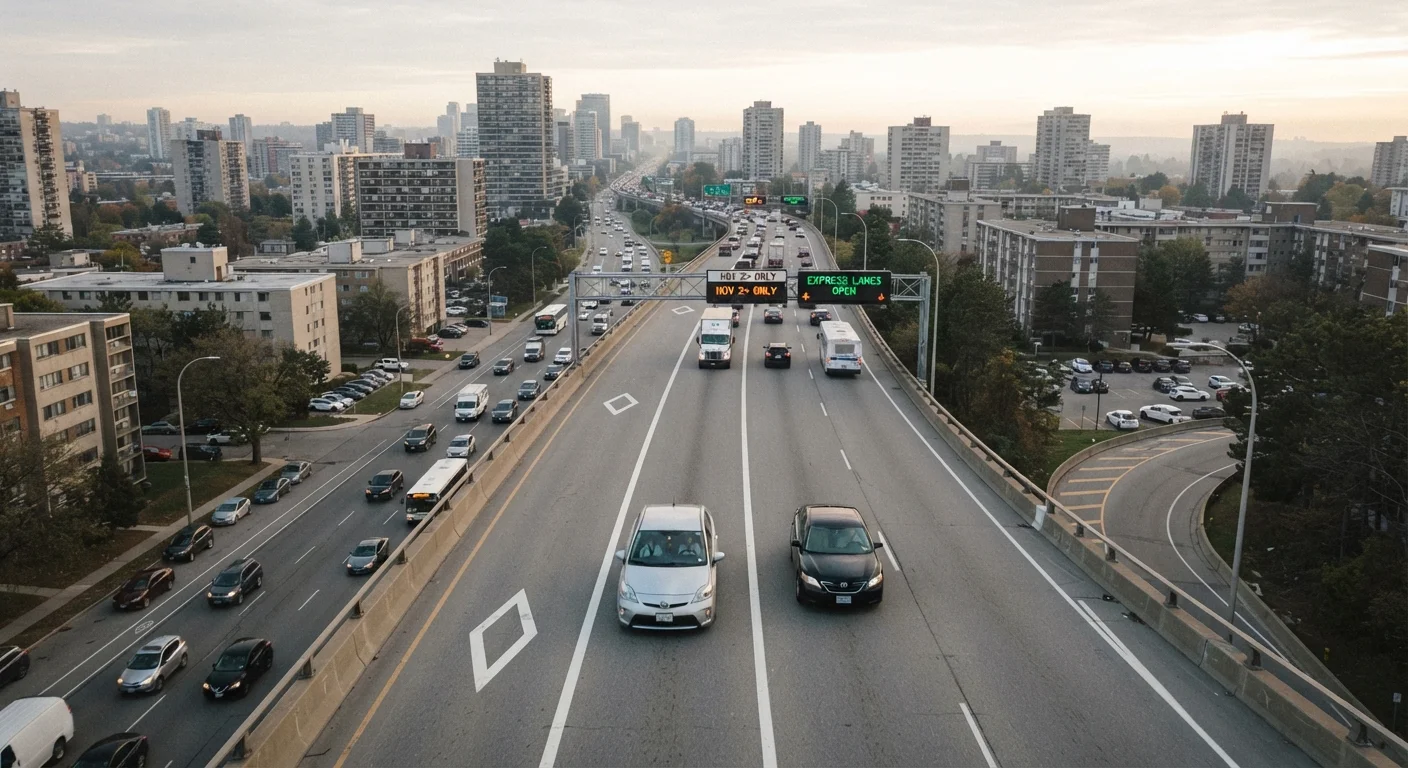
Solo driving offers flexibility; carpooling cuts costs. Understand what you gain and give up with each approach before you commit.
Option A
Driving Alone
Maximum control, maximum cost.
Best for: Commuters with unpredictable schedules, long or complex routes, or job sites not accessible by shared travel.
Option B
Carpooling
Shared rides, shared savings, shared schedule.
Best for: Commuters with consistent schedules and trusted co-workers or neighbors traveling the same corridor.
Key takeaways
- Solo driving offers unmatched schedule flexibility but carries the full cost of fuel, parking, and vehicle wear.
- Carpooling can cut commuting costs significantly when riders split fuel and parking expenses equally.
- Carpoolers typically give up schedule control and must coordinate around others' availability.
- HOV lane access can meaningfully reduce travel time for carpoolers on congested corridors.
- The right choice depends heavily on your specific route, schedule reliability, and financial priorities.
- Hybrid and remote work schedules change the math — recalculate if your office days have shifted.
The Real Cost of Driving Yourself
Most solo commuters mentally account for gas and stop there. The full picture is considerably larger. The IRS standard mileage rate — a commonly used proxy for true per-mile driving cost — factors in fuel, depreciation, maintenance, insurance, and tire wear. For many drivers, that adds up to a meaningful daily expense long before parking enters the equation.
Parking is often the hidden multiplier. In dense urban areas, monthly parking passes can represent a substantial fixed cost on top of fuel. Our companion piece on how parking costs shape commute decisions walks through why this line item is so frequently underestimated.
Solo driving also means 100% of vehicle depreciation accumulates on your commute miles. High-mileage commuters may find their vehicles aging faster and resale values dropping more sharply than lower-mileage counterparts — a cost that's real but rarely itemized.
The offsetting benefit is genuine: you leave when you want, stop where you need to, and answer to no one's schedule. For workers with variable hours, client visits, or childcare pickups built into their routes, that flexibility has concrete dollar value too.
What Carpooling Actually Saves — and What It Costs You
The savings from carpooling scale directly with participation. Two people splitting costs evenly cuts each person's per-trip fuel and parking expense roughly in half. Add a third or fourth regular rider and the per-person cost drops further. Over a full year of commuting, that difference compounds into a figure most people would notice in their household budget.
| Criterion | Driving Alone | Carpooling |
|---|---|---|
| Daily cost | Full fuel + parking borne alone | Split among riders |
| Schedule flexibility | Complete — leave any time | Fixed pickup/drop-off times |
| HOV lane eligibility | Generally not eligible | Typically eligible (2+ occupants) |
| Vehicle wear | 100% attributed to you | Distributed across vehicles used |
| Privacy and comfort | Full control of environment | Shared space, social coordination |
| Setup effort | None | Requires matching and agreement |
| Reliability risk | Depends only on you | Depends on all participants |
Beyond the dollar savings, carpoolers on congested routes may gain time through HOV lane access — a benefit that's route-specific but can be significant. Some areas also offer reduced toll rates or preferred parking for registered carpools, depending on local programs.
The cost is flexibility. A carpool arrangement is a social contract: someone picks up, someone is picked up, and both parties need to honor the schedule. Illness, overtime, or a sudden schedule change creates an obligation to communicate and coordinate — friction that solo drivers never face. The commuter planning reference covers formal carpool matching programs and how to structure informal arrangements to reduce that friction.
Comfort and privacy are subtler factors. A solo commute can serve as genuine decompression time. Shared rides require social awareness, compromise over music and temperature, and an ongoing relationship with your carpool partner — positive for some people, draining for others.
When the Math Shifts: Remote Work, Hybrid Schedules, and Break-Even Points
The rise of hybrid and remote work has complicated commuting math significantly. A driver who commutes three days a week instead of five sees lower total costs either way — but that also changes the carpool calculus. If your schedule varies week to week, building a reliable carpool becomes harder, and the per-trip savings may not justify the coordination effort.
Conversely, hybrid workers who do have fixed office days are often well-positioned to carpool: their schedules are predictable, and they can agree to consistent pickup windows. Our piece on hybrid schedules and commute decisions examines how to recalculate your transportation choices when your work pattern changes.
It's also worth recognizing that commuting costs are one piece of a broader household financial picture. For workers actively managing savings goals, reducing a daily commute expense is among the more controllable line items available. See the Saving & Growing hub for context on how transportation fits into personal budget strategy.
Formal Carpool Programs Exist in Many Metro Areas
Many regional transit authorities and employers run formal carpool matching programs that connect commuters traveling similar corridors. Some programs also offer guaranteed ride-home arrangements — meaning if a carpool falls through mid-day, participants can get a subsidized ride back. These programs vary widely by location, so check with your regional transportation authority or HR department to see what's available in your area.
If neither driving alone nor carpooling fits your situation cleanly, it's worth exploring what transit options you may be underestimating. Many commuters default to driving without fully auditing alternatives that exist on their corridor.
All published content on this website is for informational and educational purposes only and should not be taken as professional advice. We recommend that readers seek expert opinion before making any decisions. The website is not responsible for any actions taken based on the information provided on this website. We are not liable for any inaccuracies, modifications, or omissions in information. Moreover, external links or third-party content are provided for convenience; we are not liable for their correctness. Users are advised to verify every piece of information before they use it for any purpose.