
The Anatomy of a Strong Professional Development Plan

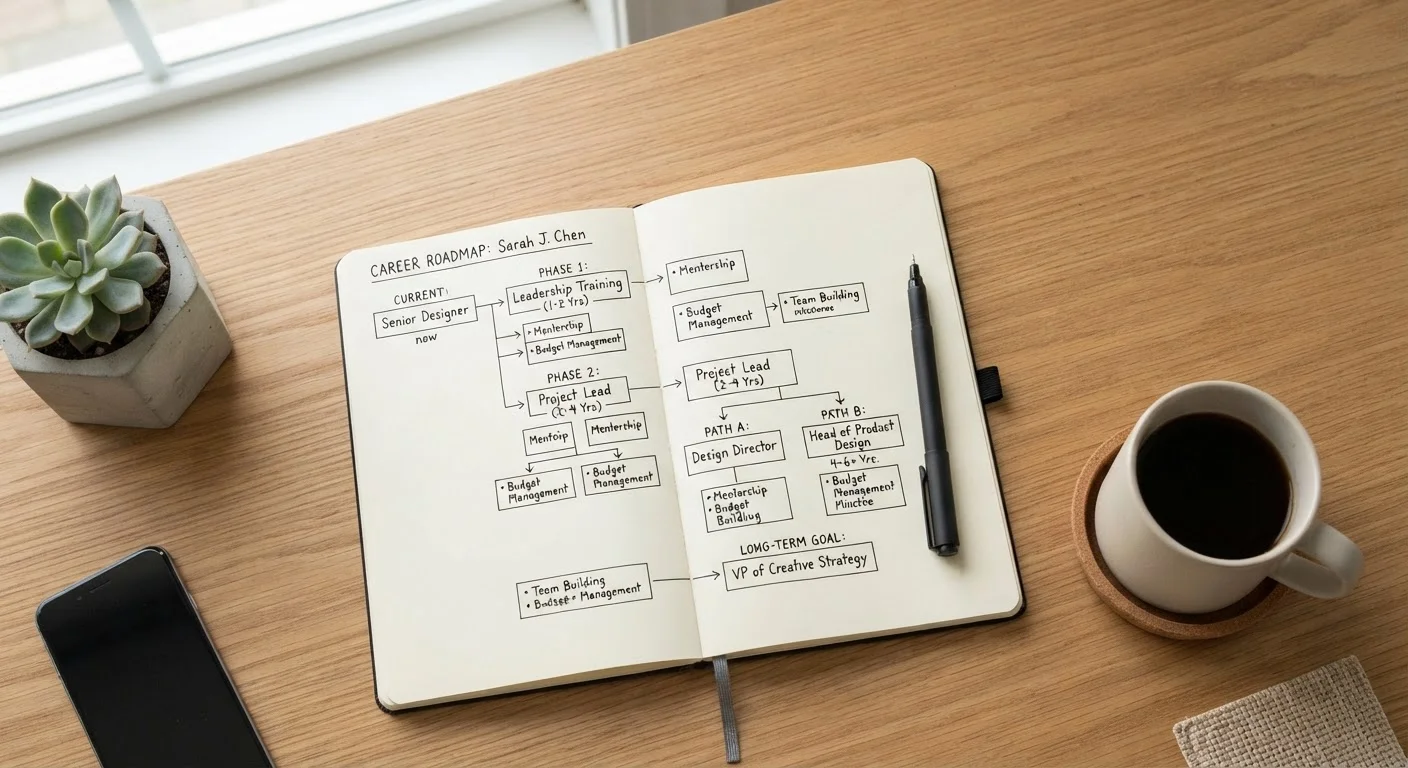
A vague development plan achieves little. Learn what separates a meaningful growth roadmap from one that sits untouched in a drawer.
Key takeaways
- Vague goals are the leading reason professional development plans go unused.
- A strong plan links specific skill gaps to concrete, time-bound learning actions.
- Regular review cycles — not rigid timelines — keep a plan relevant and alive.
- Accountability structures, including a manager or peer, significantly improve follow-through.
- Your plan should evolve as your role, industry, and ambitions shift.
Why Most Development Plans Fail Before They Start
Most organizations ask employees to submit a professional development plan at some point. Most of those plans are forgotten within weeks. The culprit isn't lack of ambition — it's lack of structure. A document that says "improve leadership skills" or "become more strategic" gives you nothing to act on. It's a wish list dressed up as a plan.
Research on goal-setting consistently shows that specificity and feedback loops are the strongest predictors of goal achievement. Without them, even motivated professionals default to the urgent over the important. The good news: fixing a weak plan doesn't require more ambition. It requires a clearer architecture.
Understanding what separates a meaningful growth roadmap from a performative checkbox exercise is the first step. For a broader look at how skill development compounds over a career, see our comprehensive framework for building workplace skills.
The Core Components of a Meaningful Plan
A functional professional development plan is built from five interlocking parts. Remove any one of them and the whole structure weakens.
- A clear starting point: An honest assessment of where you are today — skills, gaps, reputation, and trajectory.
- A defined destination: A role, capability level, or professional outcome you're working toward, specific enough to recognize when reached.
- A gap analysis: The delta between your current state and target state, broken into skill categories.
- Learning actions: Concrete activities — courses, stretch assignments, mentorship, lateral projects — tied to specific gaps.
- Review checkpoints: Scheduled moments to assess progress, adjust priorities, and update the plan based on new information.
This structure applies whether you're a first-year analyst or a department head. The specifics change; the anatomy doesn't. Professionals who want their workplace to actively support this kind of growth should also evaluate whether their current employer is set up to do so — our piece on workplaces where career growth actually happens is a useful reference.
Setting Goals That Actually Drive Action
The most common failure mode in development planning is setting goals at the wrong altitude. "Become a better communicator" floats too high to be useful. "Deliver one data-driven presentation to senior leadership by Q3" is something you can schedule, prepare for, and measure.
Effective development goals share three qualities:
- Specificity: They describe a defined outcome or behavior, not a general trait.
- Time-bounding: They have a deadline — not to create pressure, but to create priority.
- Relevance: They connect to a real career objective, not just what sounds impressive on a self-review form.
It also helps to distinguish between outcome goals (get promoted to senior manager) and process goals (complete two cross-functional projects in the next six months). Outcome goals set the direction; process goals give you something to do on Monday morning. Strong plans need both.
Write your development goal as if you're describing it to your manager in a check-in meeting. If you'd stumble explaining it in a sentence, it's not specific enough yet.
Forcing yourself to articulate a goal out loud — or in plain writing — reveals vagueness that looks plausible on paper. This simple test catches the most common planning failure before it costs you months.
Prioritize one to two high-leverage gaps per planning cycle rather than listing every area for improvement. Depth of progress on fewer goals beats shallow movement across many.
Cognitive load and time are finite. Professionals who try to improve everything simultaneously typically see less measurable growth than those who focus systematically on their highest-impact gaps.
Thinking through whether you're building toward specialization or a broader portfolio of skills is also worth doing early. The answer shapes which goals belong on the plan at all. Our article on specialisation vs. generalisation walks through how to make that call.
Identifying Skills Gaps With Precision
Knowing you have a gap is not the same as knowing what the gap actually is. "I need to improve my technical skills" is too broad to act on. A precise gap analysis looks like this:
- Identify the role or level you're targeting and list its core competencies.
- Rate your current proficiency against each competency honestly — and seek external input where possible (peer feedback, manager assessments, 360 reviews).
- Rank gaps by impact: which missing skills are most likely to block your progress or most valued in your target role?
- Separate foundational gaps (must-fix) from developmental gaps (good-to-have).
Self-assessment alone tends to be unreliable. People systematically overestimate competence in areas they use often and underestimate it in areas they rarely practice. That's why external input — even informal — anchors a gap analysis in reality rather than perception.
For a structured approach to identifying and closing those gaps over time, the building workplace skills framework provides a practical method.
Building In Accountability and Review Cycles
A plan without a review structure is just a document. The most effective professional development plans treat accountability as a design feature, not an afterthought.
Practical accountability mechanisms include:
- A development conversation with your manager: Sharing your plan creates shared ownership. It also surfaces resources — projects, introductions, budget — you might not access alone.
- A peer accountability partner: Someone at a similar career stage who checks in quarterly. Peer accountability works because the social element adds real friction to abandoning commitments.
- Scheduled self-reviews: Block time every 90 days to assess what you completed, what you skipped, and why. Honest retrospection is where most of the learning happens.
Review cycles should be frequent enough to catch drift early but not so constant that they feel like administrative overhead. Quarterly works for most people; high-change periods (new role, new team, organizational restructuring) may warrant monthly check-ins.
Building accountability into your development routine is also addressed in our guide on building a personal development routine from scratch, which offers useful frameworks for sustaining momentum.
Putting the Plan to Work
The gap between a written plan and lived progress comes down to integration. Your development plan needs to connect to your actual calendar and your actual work — not exist as a separate document you open once a year.
A few practical moves that make this happen:
- Attach each learning action to a specific week or month, not just a quarter. Vague timelines drift.
- Look for overlap between development goals and current assignments. A stretch goal achieved through real work compounds faster than a training module completed in isolation.
- Revisit your plan whenever your role significantly changes — a promotion, a restructuring, a new manager. What was relevant six months ago may no longer be the priority.
Professional development and personal growth are more connected than most people acknowledge. The habits and mindset work described in our complete guide to personal growth often underpin the professional progress people attribute purely to skill-building.
Finally, consider how your professional development plan intersects with the reputation you're actively building. Growth that isn't visible to the right people has limited career impact — our piece on building a professional reputation before you feel ready addresses exactly that dimension.
A strong plan isn't a perfect document. It's a living tool that gets more useful as you use it, revise it, and hold yourself to it.
All published content on this website is for informational and educational purposes only and should not be taken as professional advice. We recommend that readers seek expert opinion before making any decisions. The website is not responsible for any actions taken based on the information provided on this website. We are not liable for any inaccuracies, modifications, or omissions in information. Moreover, external links or third-party content are provided for convenience; we are not liable for their correctness. Users are advised to verify every piece of information before they use it for any purpose.