
Signs You've Crossed Into Burnout — and What That Distinction Matters

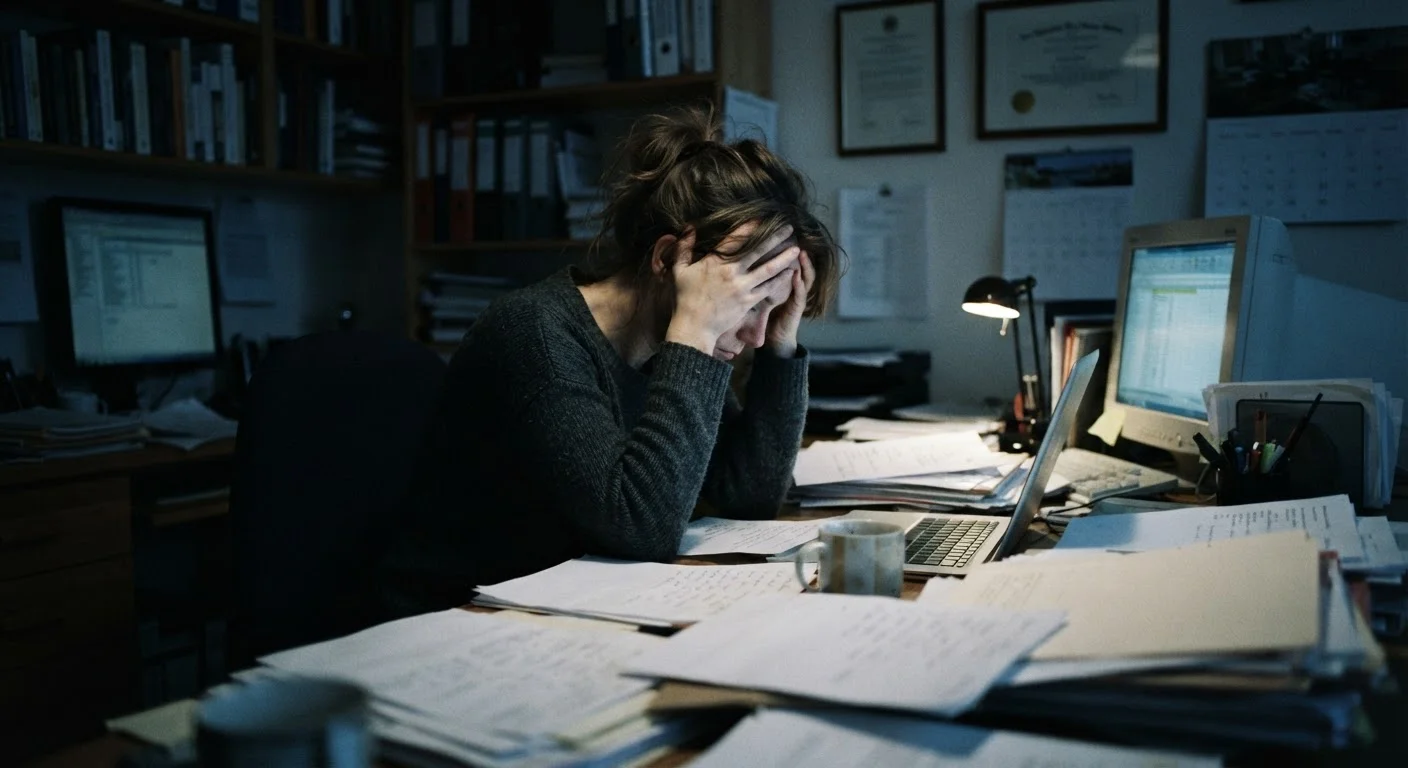
Stress and burnout are not the same thing. Understanding the difference shapes how you respond — and whether rest alone is enough to recover.
Key takeaways
- Stress and burnout are distinct states that require different recovery approaches.
- Burnout is marked by emotional detachment and loss of meaning, not just fatigue.
- Rest alone is often insufficient for burnout recovery — structural changes usually matter too.
- Burnout develops gradually, making early recognition a meaningful advantage.
- Consulting a mental health professional is appropriate when burnout significantly disrupts daily functioning.
Stress vs. Burnout: Why the Difference Is Not Semantic
Most of us use "stressed" and "burned out" interchangeably, but treating them as the same thing leads to the wrong response. Stress is a state of pressure — too much to do, too little time, competing demands. It's uncomfortable, but it has a quality of engagement. You're still in the fight.
Burnout is the aftermath of losing that fight repeatedly, for too long. Psychologist Christina Maslach, whose research shaped how the field understands burnout, identified emotional exhaustion as its core feature — a sense of being so drained that you have nothing left to give. What follows is depersonalization: a kind of emotional distance or cynicism toward your work or responsibilities. The third dimension is a diminished sense of personal accomplishment — feeling like your efforts don't matter or that you're no longer capable.
That's a meaningfully different experience from a stressful week. And it calls for a meaningfully different response. As part of a broader conversation about sustainable living, understanding burnout is foundational — see this complete overview of work-life balance for context on how these dynamics connect.
The Signs That You've Crossed the Line
Burnout rarely announces itself with a dramatic moment. It accumulates. The signals tend to be subtle at first, then harder to ignore. Here's what the shift often looks like in practice:
- Exhaustion that sleep doesn't fix. You wake up tired. Days off don't restore you. Rest feels insufficient rather than restorative.
- Emotional flatness or cynicism. Things you once found meaningful — your work, hobbies, relationships — feel hollow or irritating. This isn't laziness; it's a symptom.
- Reduced effectiveness despite effort. You're putting in the hours but producing less. Concentration is harder. Simple tasks take longer than they should.
- Physical complaints without clear cause. Frequent headaches, gastrointestinal issues, and a weakened immune response are commonly reported alongside chronic burnout, though any persistent physical symptoms deserve medical evaluation.
- Detachment from people around you. Relationships start to feel burdensome. You pull back socially, not because you want solitude, but because engagement feels impossible.
The pattern that matters is persistence. A rough month isn't burnout. But if these experiences have been your baseline for several months with no improvement — especially if they started during or after a period of sustained high demand — that distinction is worth taking seriously.
77%
Workers who have experienced burnout at their current job
According to a Deloitte workplace survey, the majority of professionals report having experienced burnout, with nearly half citing it as a repeated occurrence.
2–4 weeks
Typical relief from vacation before burnout symptoms return
Research on workplace recovery suggests that without addressing root conditions, post-vacation restoration effects fade within weeks of returning to the same environment.
3 dimensions
Core components of burnout identified by researchers
Christina Maslach's foundational research identified emotional exhaustion, depersonalization, and reduced personal accomplishment as the three defining features of burnout.
Why It Matters How You Label What You're Feeling
If you mistake burnout for stress, you'll likely try to push through it — work harder, be more disciplined, take a long weekend. These strategies work for stress. For burnout, they often make things worse, or simply fail to move the needle at all.
Burnout recovery typically requires what researchers call "resource restoration" — and that goes beyond sleep. It involves reducing demands, rebuilding a sense of autonomy and control, reconnecting with what feels meaningful, and in many cases, restructuring the conditions that caused depletion in the first place. Hustle culture and the research on burnout explores why simply working harder rarely resolves this kind of depletion.
This is also why understanding what work-life balance actually means matters — balance isn't a fixed formula, and what restores one person may not apply to another. The goal isn't optimization; it's sustainability.
Recognizing burnout also removes a layer of self-blame. People in burnout often interpret their symptoms as personal weakness — they believe they just need to try harder or be less sensitive. That framing is both inaccurate and counterproductive. Burnout is a response to circumstances, not a character flaw.
What Recovery Actually Looks Like
Recovery from burnout is less about dramatic life changes and more about consistent, structural shifts over time. Some starting points that behavioral science and occupational health research point toward:
- Reduce the source, where possible. Identify which demands are genuinely non-negotiable versus which ones accumulated by default. Even small reductions in sustained pressure can begin to shift the trajectory.
- Protect recovery time deliberately. This means more than taking breaks — it means guarding time that is genuinely restorative. Reclaiming your evenings offers a grounded starting point for building that kind of space into a packed schedule.
- Reconnect with meaning gradually. Burnout erodes your sense of purpose. Small re-engagements — with relationships, creative work, or physical activity — can help rebuild it incrementally, rather than requiring a complete life overhaul.
- Seek professional support when needed. If burnout has significantly disrupted your daily functioning, relationships, or physical health, a licensed therapist or your primary care provider can offer personalized guidance. This article is general information — it is not a substitute for professional care.
This article is for general informational purposes only and does not constitute medical or mental health advice. If you are experiencing significant distress or health concerns, please consult a qualified healthcare professional.
Frequently Asked Questions
All published content on this website is for informational and educational purposes only and should not be taken as professional advice. We recommend that readers seek expert opinion before making any decisions. The website is not responsible for any actions taken based on the information provided on this website. We are not liable for any inaccuracies, modifications, or omissions in information. Moreover, external links or third-party content are provided for convenience; we are not liable for their correctness. Users are advised to verify every piece of information before they use it for any purpose.